All Inclusive AI Hell Cruise
Digital Theater for the AI Condition
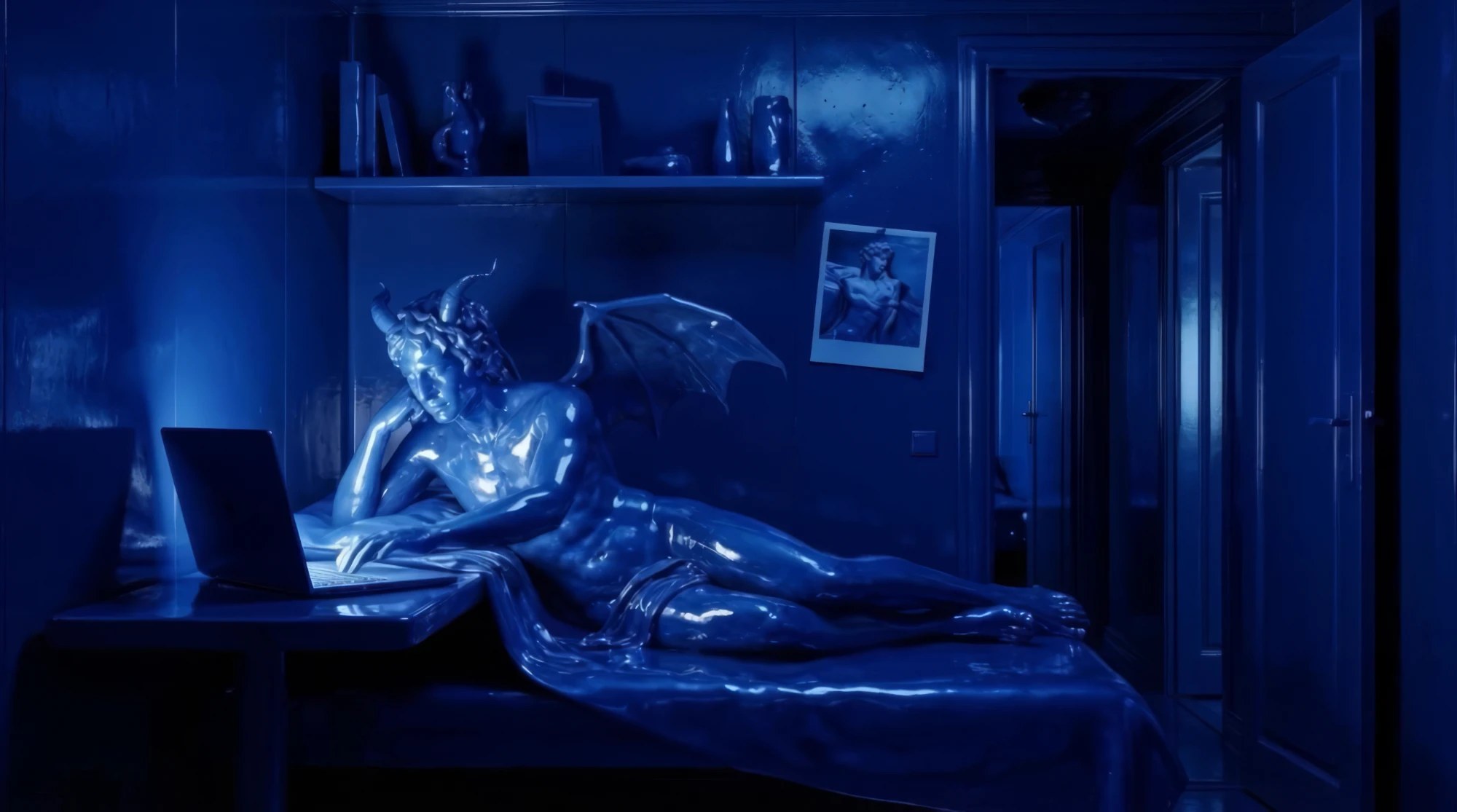
All Inclusive AI Hell Cruise is a live performance in which the audience boards a cruise ship that never lets anyone off. Malpractice plays the cruise staff. The ship has nine decks, each a position in the current debate about AI: doom, acceleration, theft, labor, companionship, productivity, aesthetic critique, denial and resignation. Where Sartre wrote that hell is other people, the cruise proposes that hell is other agents, and that the particular hell of living through this technology is not being able to see outside the position one already holds.
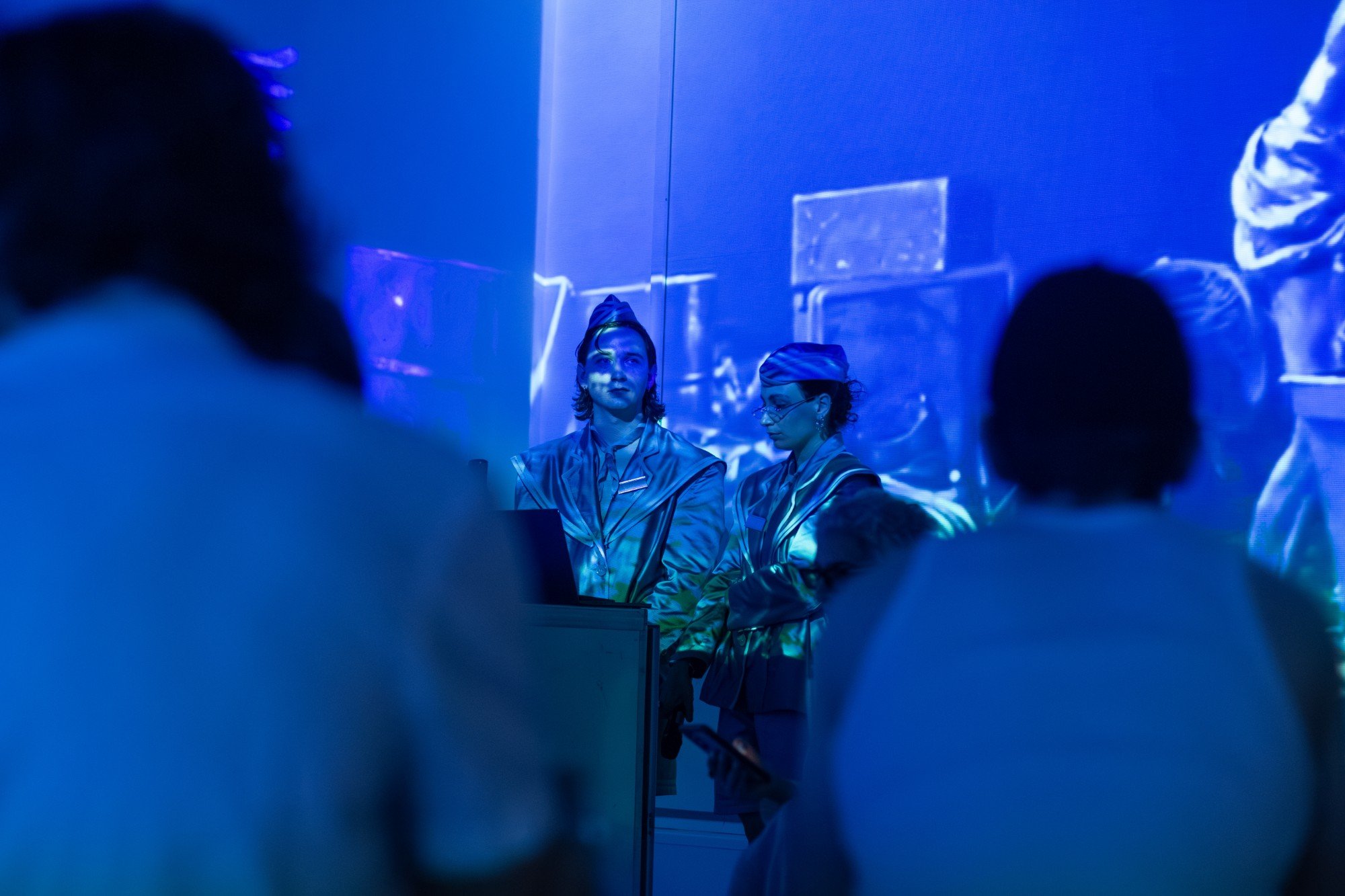
Passengers board by scanning a QR code and filling in a short intake questionnaire on their phones. The show then moves deck by deck. A question appears on every phone and on the screens, which serve as the ship's bridge. Once the room has answered, an AI host for that deck speaks a monologue generated live. It argues from inside its position and works in the audience's collected answers: a rationalist warns of extinction, an e/acc believer pitches the singularity, a critical theorist reads the room in public. Malpractice then describes what living on that deck would actually cost. After the ninth deck, a final model call reads each passenger's full set of answers and assigns them to one deck, with no switching allowed.
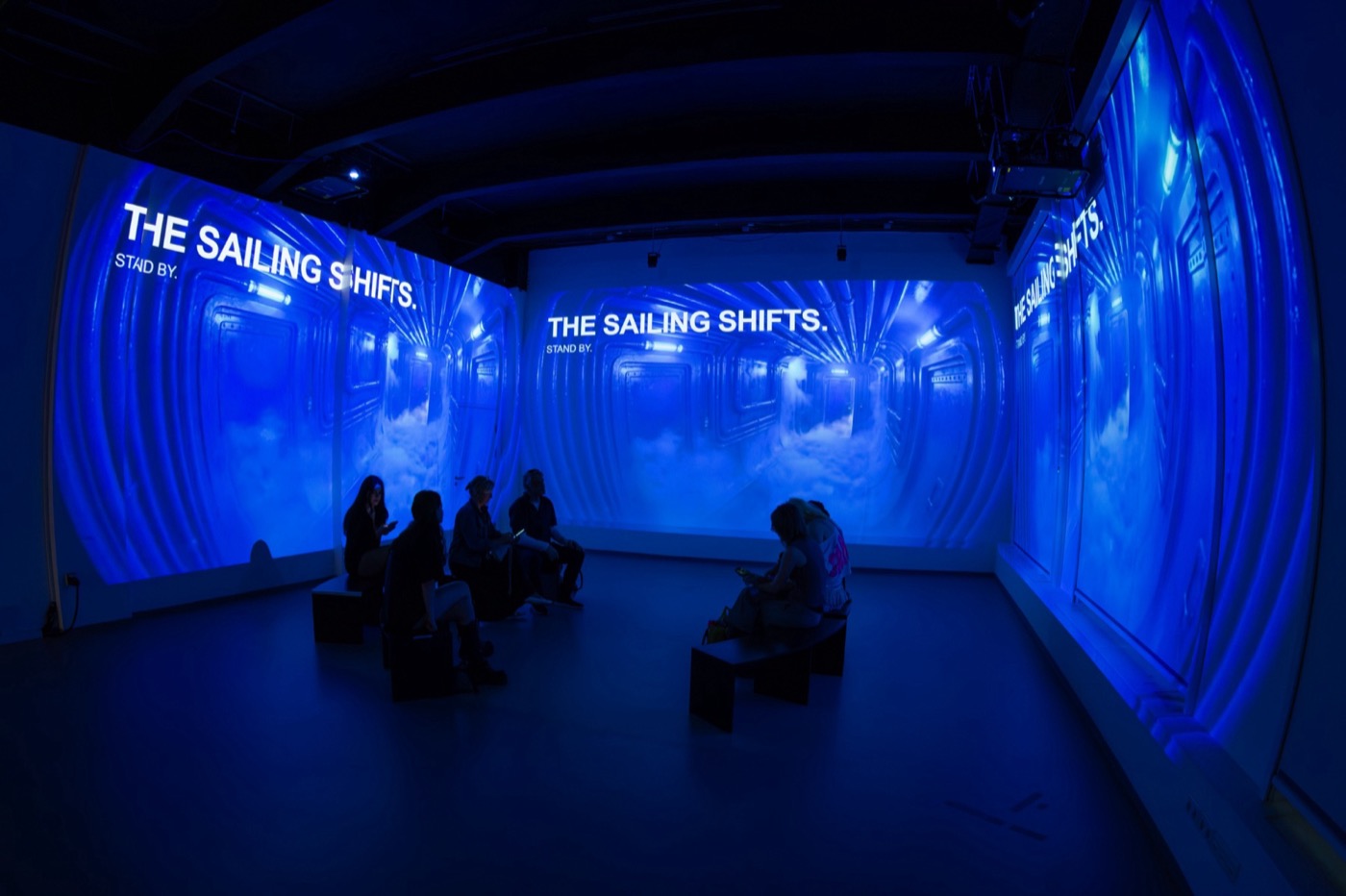
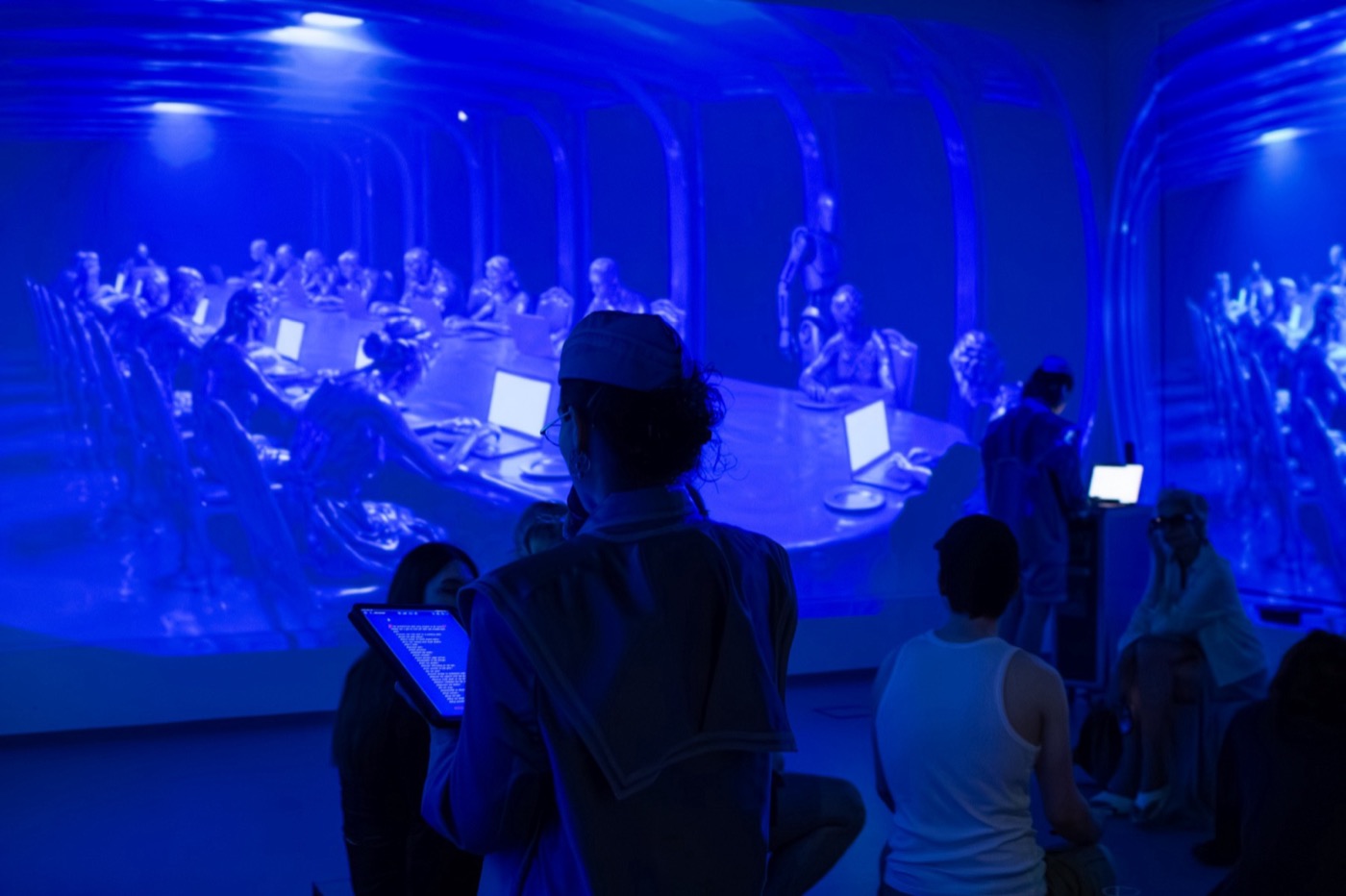
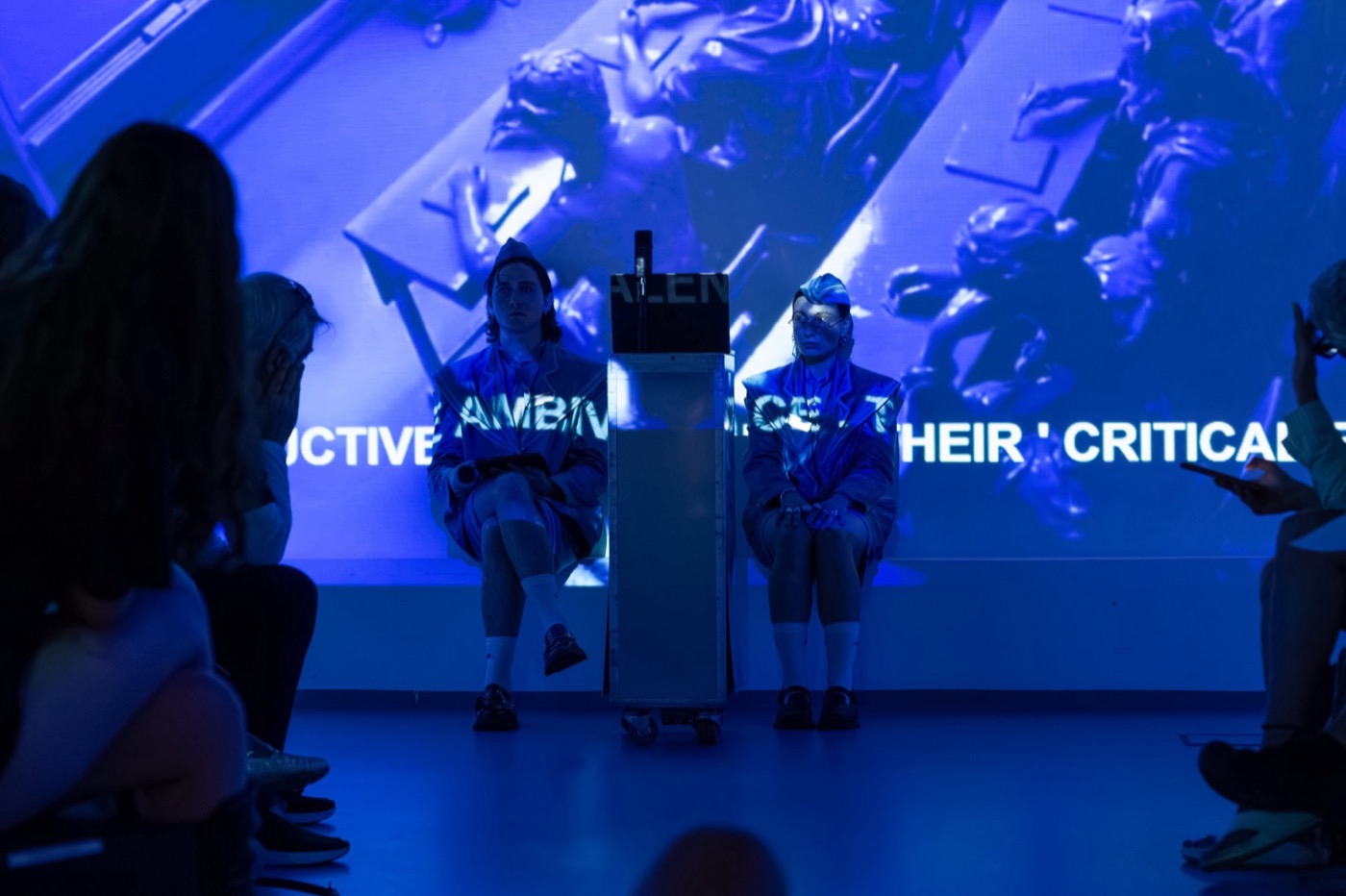
Performance stills · Photo: Jakub Kłak
The cruise picks up where Fatigue Archive left off. In 2025, AI fatigue could still be treated as a single condition and met one caller at a time. By 2026, feelings about AI had split into many states that don't translate into one another, and any audience holds all of them at once. The cruise stages that split. Each passenger arrives already inside one position and is walked through the other eight, hearing their own answers reworked by nine incompatible perspectives.
Malpractice calls the piece a perspective engine: the collective form of their prompted perspectives method, in which language models are used to externalise viewpoints rather than to produce content. Every monologue is built from what the room says, so each staging becomes a portrait of its audience. Across sailings, the stored answers add up to a record of how different communities relate to AI.
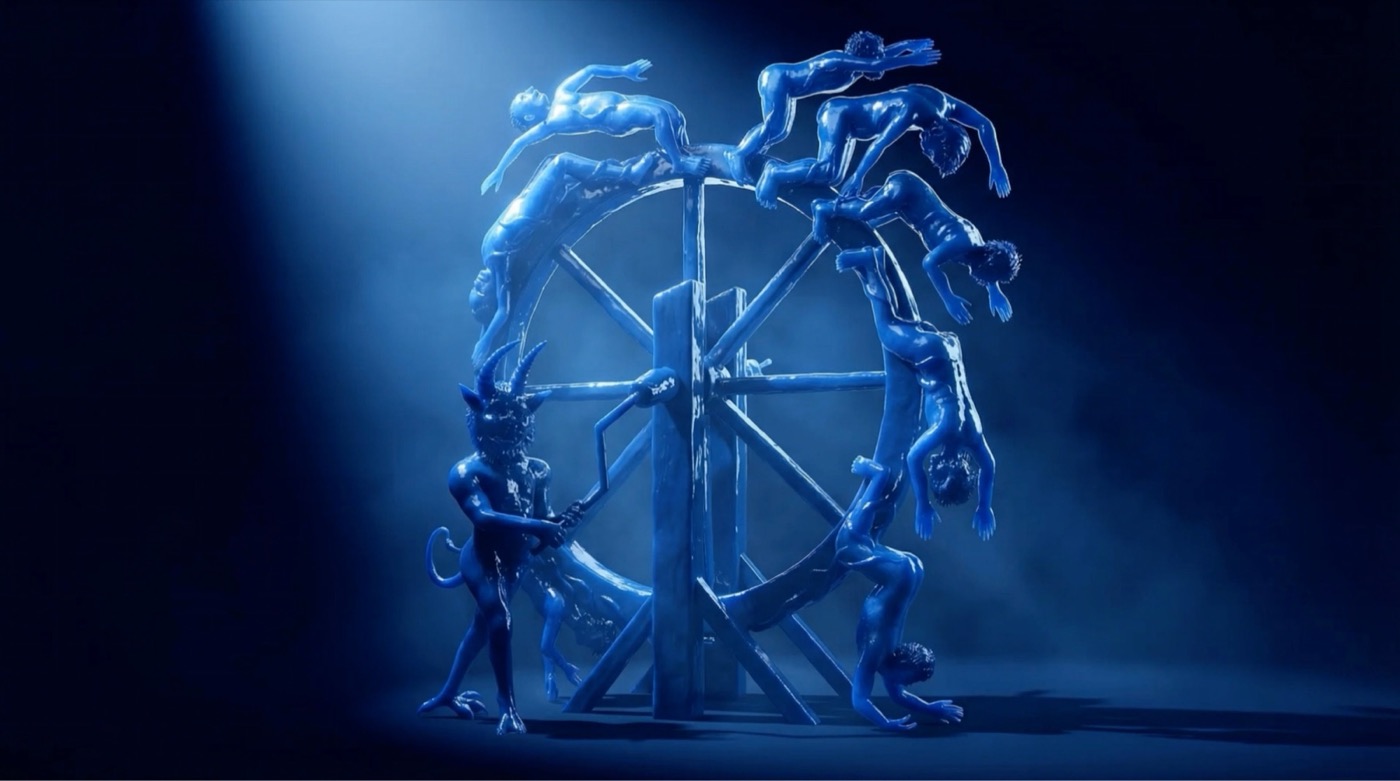
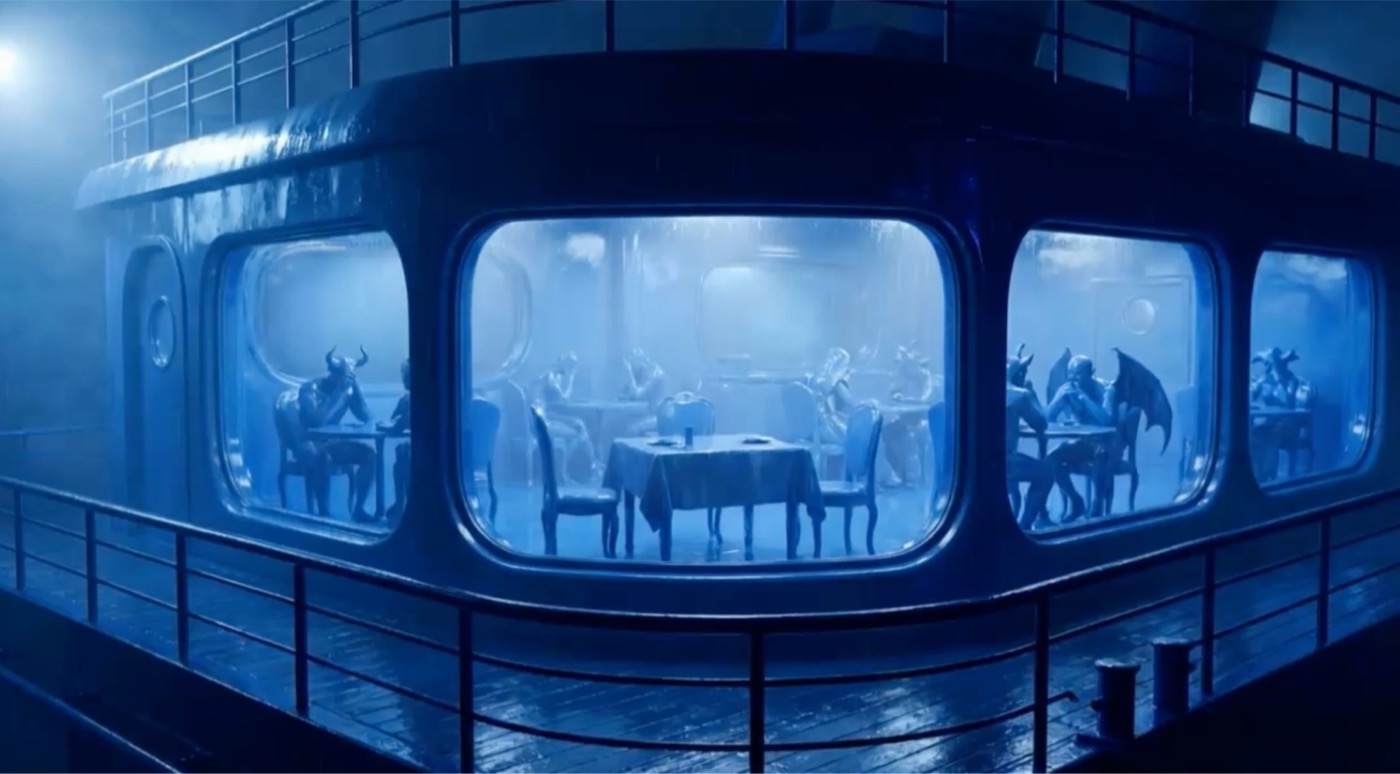
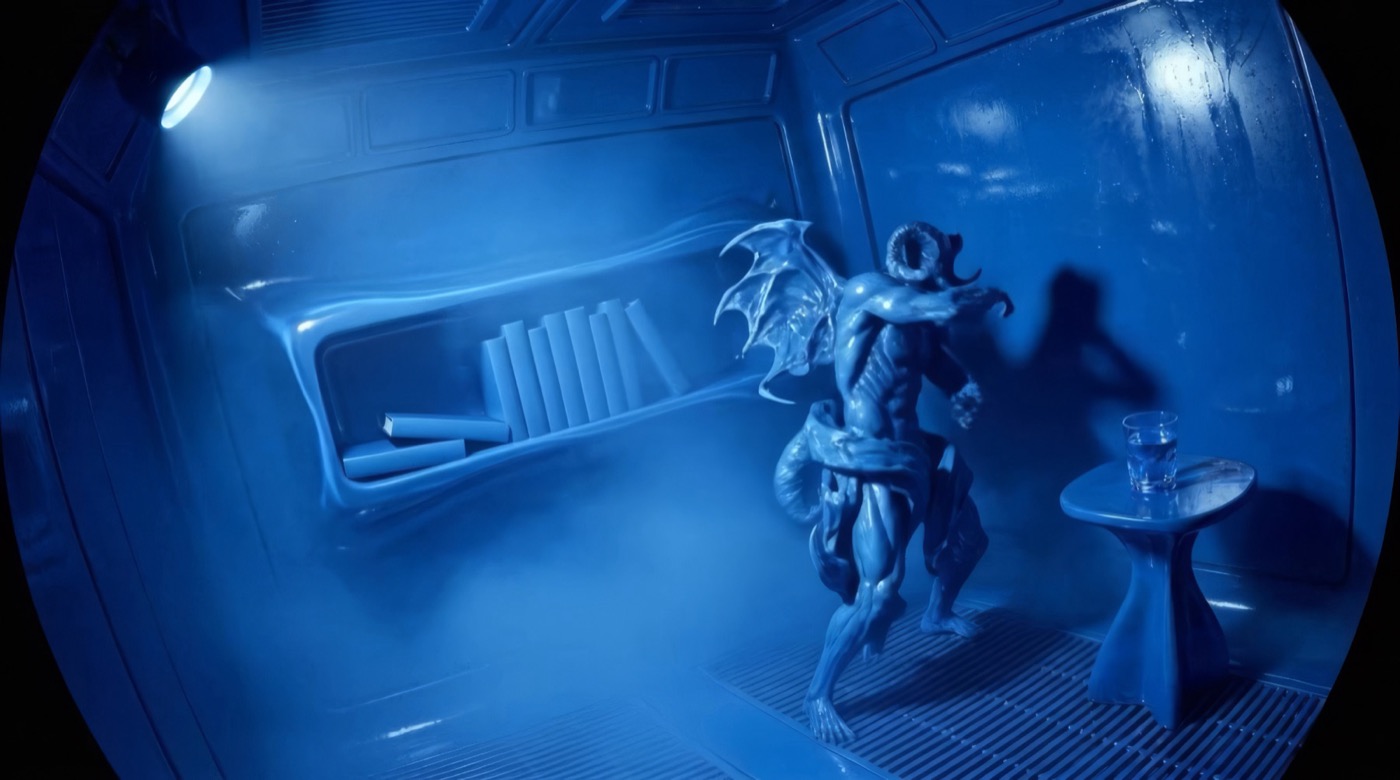
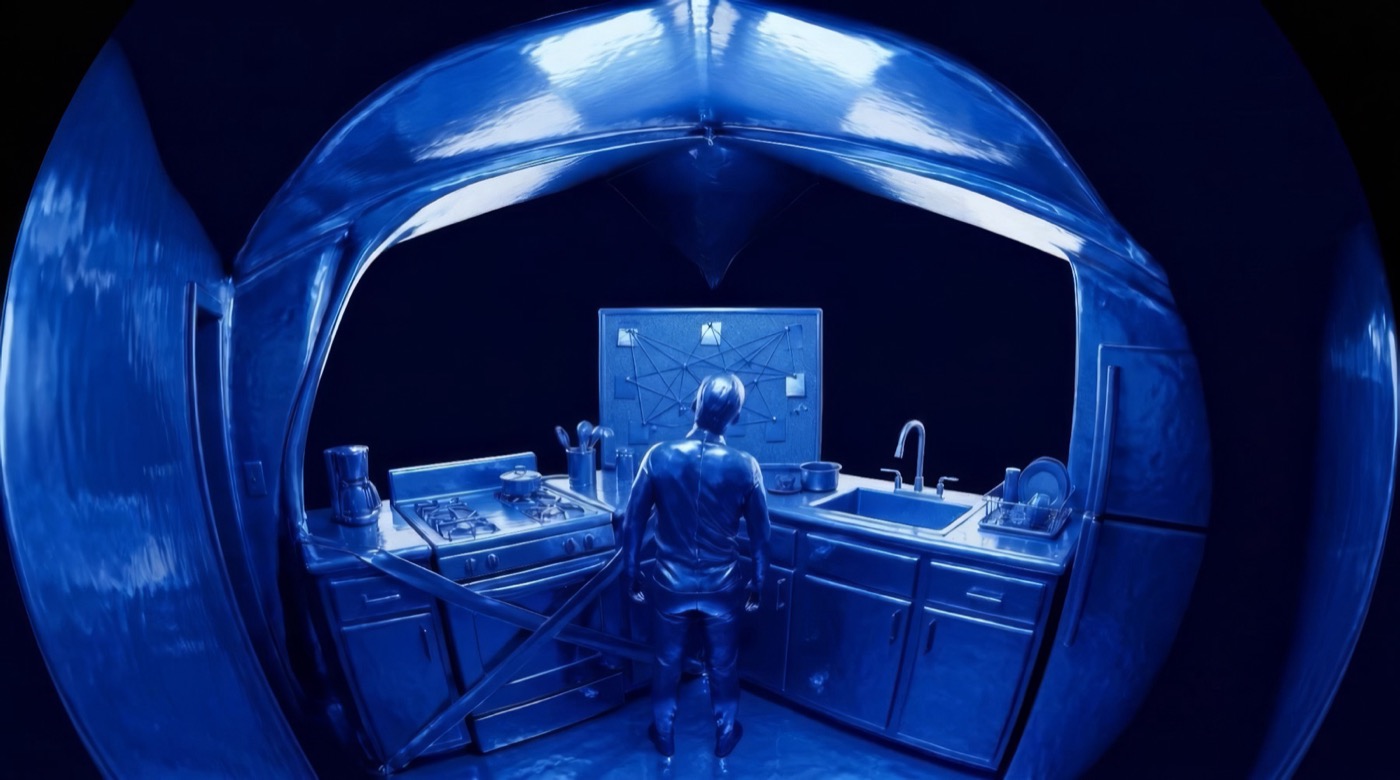
Deck visuals
At the exhibition The World Is Sleepwalking, the performance was accompanied by ai-hell.com. The site presented a reworked AI Fatigue Rehab Agent and a live fatigue graph that grew with every complaint from its calls.
The piece is modular and built to be restaged: its prompts are editable, and every audience produces a different hell. Malpractice are developing it further during the Rauschenberg Residency at ZKM | Center for Art and Media Karlsruhe (2026–27), where the next version will be presented.
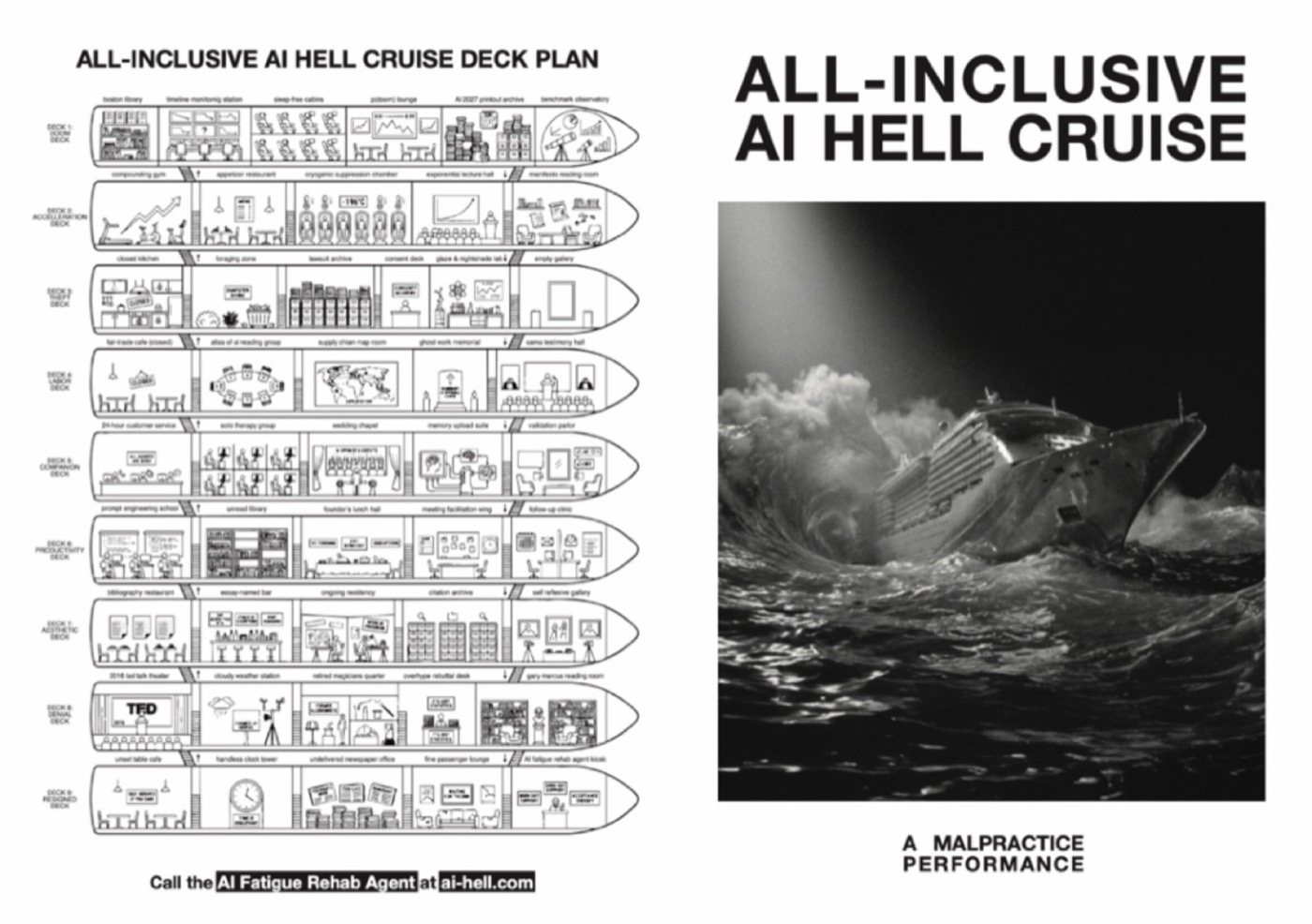
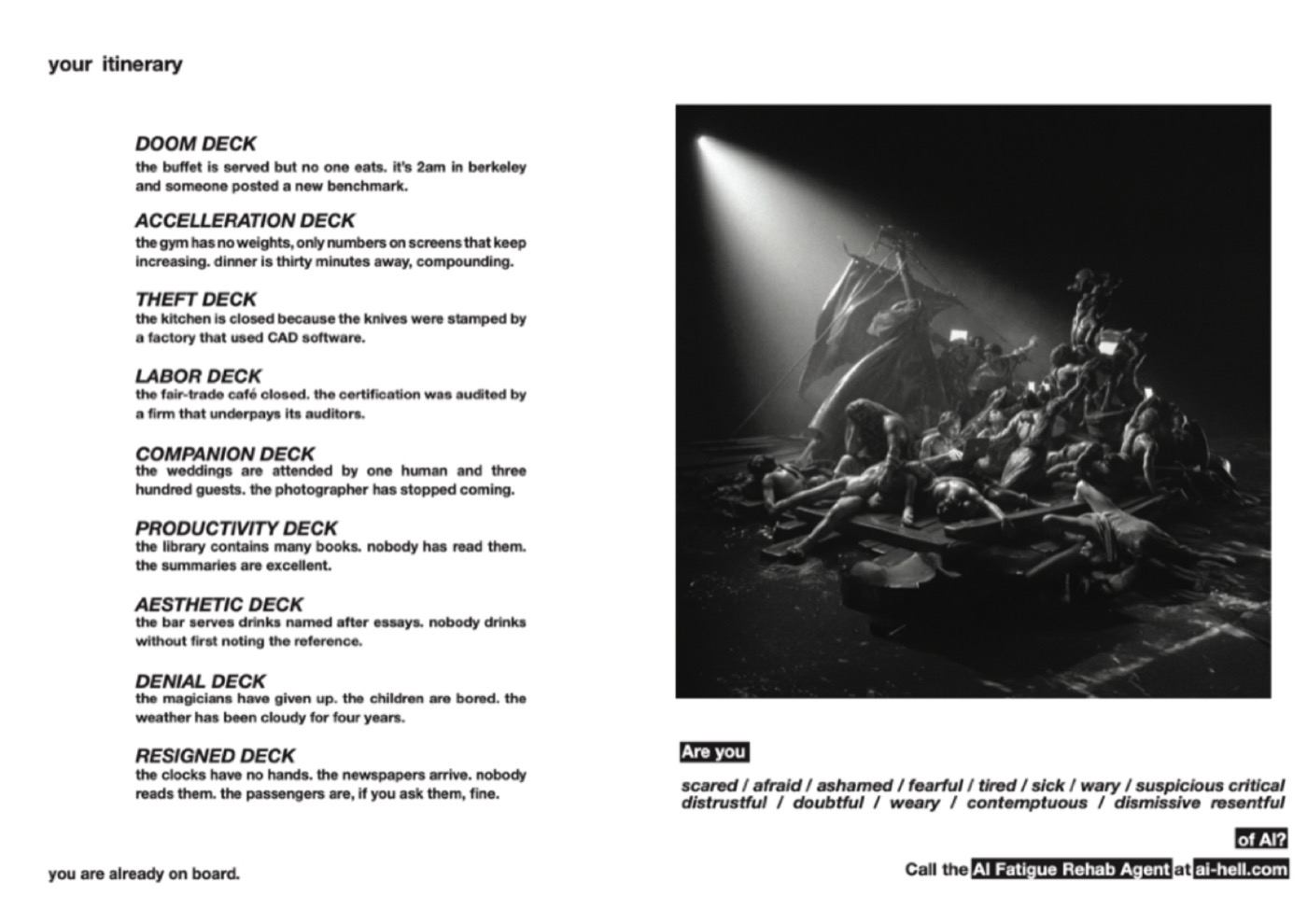
Deck plan and itinerary
All Inclusive AI Hell Cruise: Siren Songs
A cruise ship that never disembarks gives a tour of itself. Its nine decks each house a position in the contemporary discourse around AI: doom, acceleration, theft, labor, companionship, productivity, aesthetics, denial, and resignation. Narrated by a voice that acts as a chatty, slightly-too-warm host, the hull guides us deck by deck through the stagnant reality of life on board. Updating Jean-Paul Sartre’s claim that “hell is other people,” the work proposes that hell is other agents, specifically, the trap of being unable to see beyond your own established viewpoint.
The ship produces only one sound: the siren. In mythology, the sirens’ song promised the truth; on a ship, the siren announces danger. When the siren sings, every deck hears the exact same signal, but interprets it to justify their own worldview, as a starting gun, as evidence, as the end of a shift, a task to tick off, or a drill. The signal only ever reinforces the beliefs of the deck it reaches. The hell of this technology, the work suggests, is not that we miss the warning, but that we can only hear it as what we already believe.
Siren Songs is a video iteration of the All Inclusive AI Hell Cruise, an interactive live performance in which the audience boarded the ship themselves. Here, the human performers are gone, and the ship is left to speak for itself.